

How to Take Hard Notes
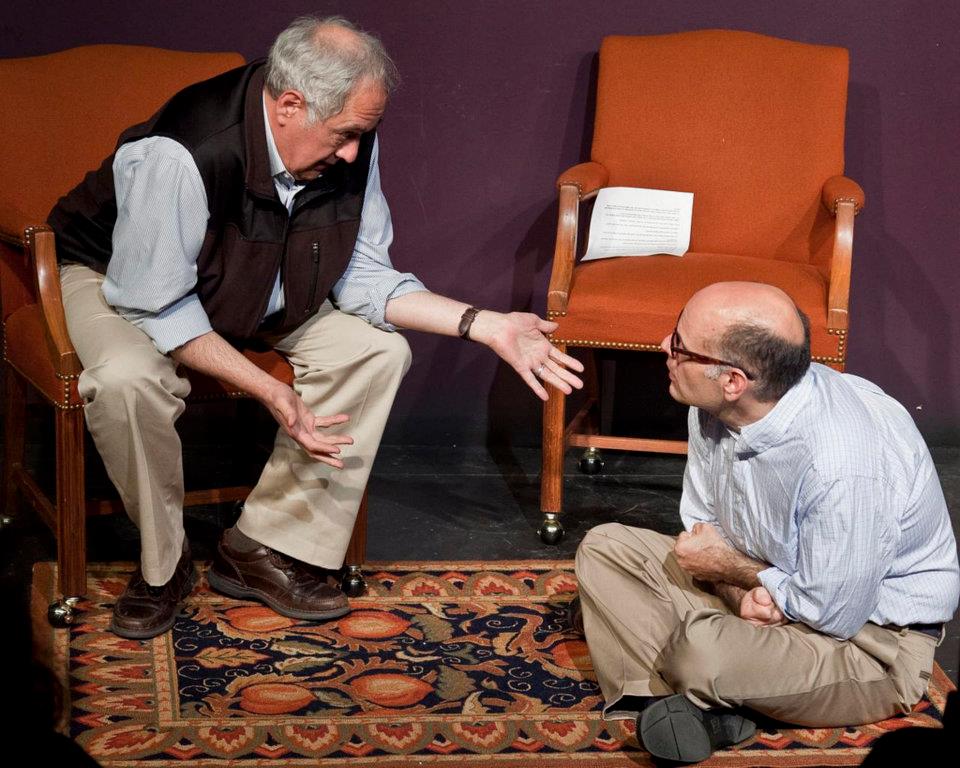
If you have taken improv classes and worked with a good teacher who knows your work, you will one day get a "hard note." A "hard note" is usually a bad habit you have developed over time that you either think is working or you are unaware of.
Some examples of "hard notes" I’ve given over the years are to improvisers who make jokes at the expense of the scene, who are always making the negative choice, or people who negate other people's ideas.
I have been on both sides of "hard notes,” both getting them as a player and giving them out as a teacher. Just so you know, after more than 30 years as a teacher, it is still not easy to give them.
Sometimes after giving a "hard note" to a student, I will agonize over whether I should have said it, then when I see them at the next class, they will say how much the note helped them — not knowing that giving it caused me to not sleep for a week.
In my improv classes, I try to balance the fun and the learning, but sometimes that "hard note" is necessary for the student if he or she wants to continue getting better. I use them sparingly. If I start to see a pattern, that is when I try to gently guide them, but sometimes that does not work and as my last resort, I will give the "hard note.”
I remember one of the hardest notes I ever got as an improviser. I was in my 30s and had been improvising for more than 12 years and apparently I knew everything. I was doing a duo show called Naked with Stephanie Weir at the IO-Chicago. Stephanie is one of the best improvisers I have ever worked with. She is brilliant, and she is a great writer, actor, and improviser. If you have seen her improvise, you know what I am talking about.
In the show we would improvise one long scene for almost an hour. I had gotten into a bad habit during the run of the show that all my characters were angry. I was unaware I was doing this and thought I was doing well and the shows were going great.
Then after one show, the director, Rob Mello, gave me the "hard note" that I was always playing angry. I am not going to lie, it stung -- a lot.
I felt ashamed, but I didn't even have a word for it back then.
Seventy-two hours later when the shame lifted, not only was Rob correct, but it was the kindest thing he could have done for me.
The stakes were high. It was a weekend show, and we had good crowds. It was a show other improvisers aspired to do. Rob's "hard note" forced me to break that bad habit and play differently, make different choices, and grow as an improviser in spite of myself and my fear. I am not so sure how graceful I was when I got the note after that show, but today I can tell you I am grateful.
So what should you do when you get a hard note?
Don't be defensive. If you trust the teacher, realize they are there to get you to do your best work. If you are confused about the note, ask questions. The clarity will help you, the teacher, and the class. Though "you" may get the "hard note,” it typically applies to other people in the class. After you take time to process it, if you have friends in the class, ask them to be honest with you. It is easier for me to take feedback from a peer than an authority figure.
Also, when I have a strong reaction to a note, I say a little prayer to myself and ask, “Please let me see it differently.”
And sometimes in a couple hours or days, it becomes clear that the hard note applies to me, or sometimes it does not. Teachers are not always right, thank God for that. Remember, the good ones want to help you figure out what works for you and have your best interest in mind.
Want to study with Jimmy Carrane? Don't miss the next Virtual Drop-In Class on July 28!